



Top Cryptocurrency Mining Software Types and How to Choose
Picking the wrong mining software doesn’t just cost you time during setup. It can quietly drain your profitability through inefficient algorithms, missed pool fees, and hardware mismatches that compound over weeks and months. With dozens of platforms competing for your attention, each claiming to maximize hashrate and simplify management, the decision gets harder the more you research. This guide cuts through the noise by mapping every major software category, naming the tools that actually matter, and giving you a clear framework for matching software to your specific hardware, technical skill level, and operational goals.
Table of Contents
- Understanding mining software categories
- Key types of mining software and who uses them
- Comparison: Features, performance, and ideal use cases
- How to choose the right mining software for you
- What most mining software reviews miss
- Find mining hardware optimized for your software
- Frequently asked questions
Key Takeaways
| Point | Details |
|---|---|
| Match software to hardware | The software must fit your mining hardware—ASIC, GPU, CPU, or FPGA—for best performance. |
| Interface matters | Pick a command-line interface for control, or GUI for ease, based on your comfort and expertise. |
| Fleet management streamlines farms | Mining management platforms like Hive OS offer central dashboards and automation for multi-rig operations. |
| Profit-switching boosts returns | Automated tools can improve short-term profits for GPU miners by switching to top-yield coins. |
| Test and scale wisely | Start with small setups before scaling, and prioritize security and community-backed software. |
Understanding mining software categories
Before comparing individual tools, it helps to understand how the entire software landscape is organized. Most miners make the mistake of jumping straight to a product name without first understanding which category fits their setup. That shortcut often leads to frustration.
Mining software is primarily categorized by two dimensions: hardware compatibility and user interface. On the hardware side, you have ASIC software, GPU software, CPU software, and FPGA software. Each targets a different type of mining device and is optimized for the algorithms those devices run best.
Here is how the hardware categories break down:
- ASIC software (e.g., CGMiner, BFGMiner): Built for dedicated mining chips running SHA-256, Scrypt, or other fixed algorithms. Dominant in Bitcoin mining.
- GPU software (e.g., GMiner, T-Rex): Designed for graphics cards, flexible across many algorithms, popular for altcoins.
- CPU software (e.g., XMRig): Targets general-purpose processors, best for privacy coins like Monero that use RandomX.
- FPGA software (e.g., BFGMiner plugins): Sits between ASIC efficiency and GPU flexibility, used by developers and hardware tinkerers.
The second dimension is the user interface. Command-line tools like CGMiner and BFGMiner offer deep configuration control, overclocking access, and scripting capability, but they demand technical comfort. GUI-based tools like EasyMiner and MultiMiner wrap the same core functions in a visual interface, making them far more accessible for newcomers. Some platforms, like Awesome Miner, combine both approaches with a GUI frontend and CLI access for power users.
Choosing the wrong interface type is one of the most common beginner mistakes. A miner who struggles with command-line syntax will waste hours on setup instead of earning hashrate.
If you are evaluating best ASIC miner options for a home setup, understanding these categories first will save you from buying hardware that your preferred software does not fully support. Similarly, if you are browsing top home ASIC miners for a small farm, knowing whether you need CLI depth or GUI simplicity shapes every software decision that follows.
Key types of mining software and who uses them
Now that the categories are clear, let’s look at each software type in detail, including who actually uses them and why.
1. ASIC mining software (CGMiner, BFGMiner)
These are the workhorses of professional Bitcoin mining. CGMiner excels in SHA-256 Bitcoin mining with granular overclocking and fan control, but the command-line interface creates a steep learning curve. BFGMiner adds FPGA support and modular device drivers. Both are open-source, meaning the community actively patches bugs and adds features. The tradeoff is that mismatched hardware configurations can silently reduce performance, sometimes by 10 to 20 percent, without obvious error messages.
2. GPU mining software (GMiner, T-Rex, NiceHash)
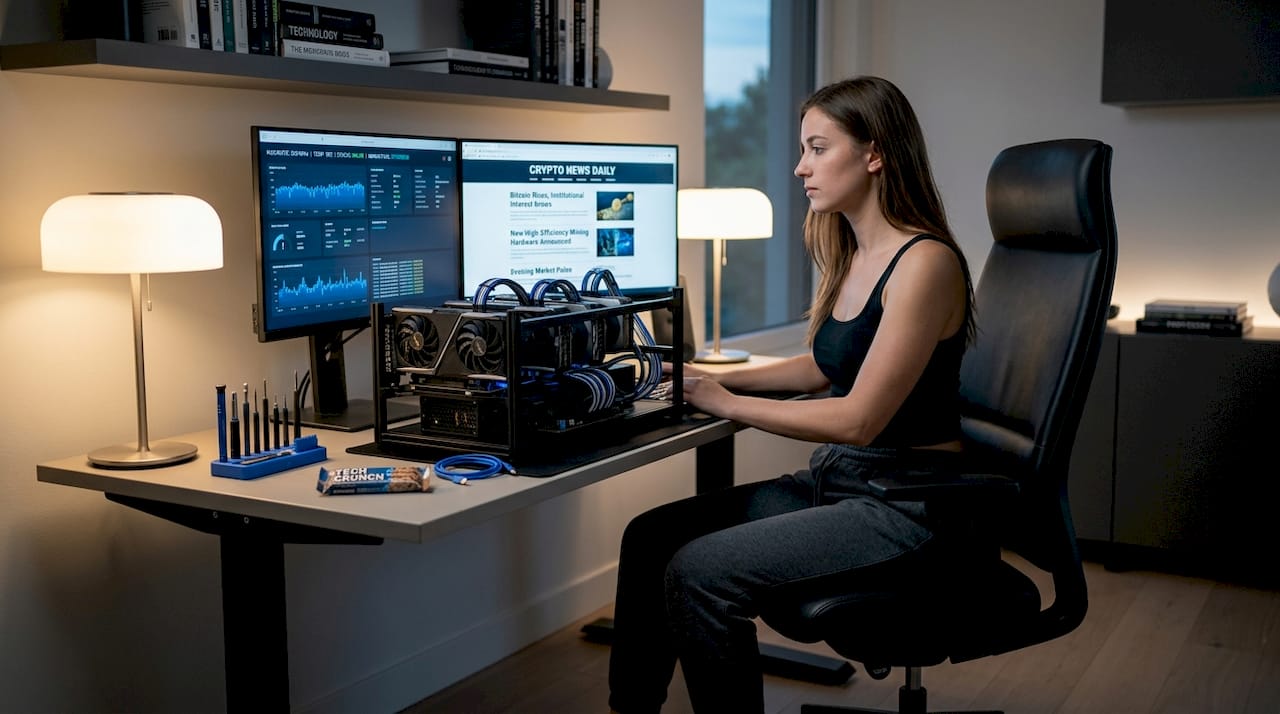
GPU tools like NiceHash suit altcoins and Ethereum Classic because they can switch algorithms dynamically based on profitability signals. GMiner and T-Rex are particularly strong on Nvidia cards, offering detailed hashrate monitoring, low DevFee structures, and dual-mining support. These tools are ideal for miners running multiple graphics cards who want to stay flexible as market conditions shift. Explore leading GPU miner programs for a hardware-software pairing perspective.
3. CPU mining software (XMRig)
XMRig is the gold standard for Monero and other RandomX coins. It is lightweight, open-source, and actively maintained. CPU mining will never match ASIC or GPU profitability for Bitcoin, but for privacy coin enthusiasts or hobbyists who want to use idle hardware, XMRig is the go-to choice. Setup takes about 15 minutes with a basic config file.
4. FPGA software
FPGA mining sits in a niche that most miners never touch. It requires hardware programming knowledge and custom bitstreams for each algorithm. BFGMiner supports FPGA through plugins, but the learning curve is steep. The reward is efficiency that approaches ASIC levels with more flexibility to reprogram for different coins.
5. Mining management platforms (Awesome Miner, Hive OS)
These platforms are built for scale. Fleet tools like Hive OS are popular for GPU farms running Linux, with centralized alerts, remote reboots, and profitability dashboards. Awesome Miner supports both ASIC and GPU rigs from a single interface, making it a favorite for mixed-hardware farms. Pool fees typically run 1 to 3 percent, but the reduced variance compared to solo mining makes the cost worthwhile for most operators.
6. Automated profit-switching tools (NiceHash, Cudo Miner)
These tools constantly monitor algorithm profitability and switch your hardware to whichever coin pays the most at any given moment. They are ideal for GPU miners who want a hands-off approach. Check out auto profitability miners to see how hardware choices align with this strategy.
7. Cloud mining dashboards
These are not true mining software. They provide a web interface to monitor rented hashpower from a third-party data center. The risk of scams in this space is high, and you have no direct control over hardware performance or uptime.
Pro Tip: Before committing to any software, download the latest stable release and run it on a single rig for 48 to 72 hours. Track your actual hashrate against the advertised benchmark. Real-world numbers often differ from spec sheets by 5 to 15 percent depending on pool latency and hardware condition.
Comparison: Features, performance, and ideal use cases
With the types defined, a side-by-side comparison makes the decision much cleaner. Here is how the major software options stack up across the metrics that actually affect your bottom line.
| Software | Interface | Hardware | Automation | Cost | Best For |
|---|---|---|---|---|---|
| CGMiner | CLI | ASIC, GPU, FPGA | Low | Free | Advanced Bitcoin miners |
| BFGMiner | CLI | ASIC, FPGA | Low | Free | FPGA tinkerers, advanced users |
| GMiner | GUI + CLI | GPU | Medium | 0.65% DevFee | Nvidia/AMD altcoin miners |
| T-Rex | CLI | GPU (Nvidia) | Medium | 1% DevFee | Nvidia-focused altcoin mining |
| EasyMiner | GUI | GPU, ASIC | Low | Free | Beginners |
| Awesome Miner | GUI | ASIC + GPU | High | Freemium | Multi-rig farm management |
| Hive OS | GUI (web) | GPU, ASIC | High | Freemium | Linux-based GPU farms |
| NiceHash | GUI | GPU, CPU | Very High | Marketplace fee | Profit-switching GPU miners |
| XMRig | CLI | CPU | Low | Free | Monero/privacy coin miners |
Awesome Miner scores 9.3 out of 10 overall for fleet management capabilities, while Hive OS scores 8.6 out of 10, and open-source options like TeamRedMiner score 7.2 out of 10. These ratings reflect usability, feature depth, and community support combined.
A few critical distinctions worth highlighting:
- Automation depth matters at scale. A single-rig miner can manage CGMiner manually without much friction. A 50-rig farm without Awesome Miner or Hive OS becomes a full-time job.
- Cloud mining risk is real. Without physical hardware control, you depend entirely on the provider’s uptime and honesty. Many platforms in this space have histories of exit scams or inflated hashrate claims.
- Pool vs. solo mining is a risk tolerance question. Pool mining delivers consistent daily payouts with 1 to 3 percent fees. Solo mining can theoretically yield a full block reward, but for most miners, the wait time makes it statistically impractical.
For miners evaluating profit-switching tools or looking at GPU miner comparisons, the table above gives a fast reference point before going deeper into any single platform.
How to choose the right mining software for you
The comparison table is useful, but the right choice depends on your specific situation. Here is a practical decision framework built around the variables that actually matter.
Start with your hardware. ASIC miners running Bitcoin need CGMiner or BFGMiner. GPU rigs mining Ethereum Classic or Kaspa need T-Rex, GMiner, or similar. CPU miners focused on Monero need XMRig. Hardware determines your software shortlist before anything else.
Assess your technical comfort level. If you are not comfortable editing config files or running terminal commands, start with a GUI-based tool. EasyMiner and MultiMiner are designed for exactly this scenario. You can always migrate to CLI tools as your confidence grows.
Single rig or farm? For one or two machines, lightweight software like XMRig or T-Rex is plenty. For five or more rigs, a management platform like Awesome Miner or Hive OS pays for itself quickly in time saved and downtime prevented.
Evaluate the fee structure carefully. DevFees look small at 1 percent, but on a 100 TH/s operation running 24/7, they add up to meaningful lost revenue over a year. Calculate the actual dollar cost before choosing a platform.
Factor in security. Open-source software lets you audit the code. Closed-source platforms require trust in the developer. For large operations, open-source with an active community is the safer long-term bet.
Consider cloud mining only with extreme caution. Beginners often favor GUI tools like EasyMiner for easy setup, while advanced miners prefer modular CLI options like BFGMiner. Cloud mining carries significant scam risk and should only be considered from well-established, verifiable providers.
For home-friendly ASIC software pairings, the key is matching the software’s supported algorithms to the specific ASIC model you own. Running the wrong software on an Antminer S19 Pro, for example, will not brick the device, but it will leave performance on the table.
Pro Tip: Always check the software’s GitHub repository before downloading. Look at the date of the last commit and the number of open issues. Active repositories with recent commits signal that the development team is still engaged and patching vulnerabilities.
What most mining software reviews miss
Most reviews rank software by benchmark scores and feature checklists. That approach misses what actually determines long-term mining success.
Real-world usability in actual mining conditions is almost never tested in standard reviews. A tool that scores perfectly in a controlled benchmark can behave erratically under pool latency spikes, power fluctuations, or hardware aging. The miners who succeed long-term are the ones who chose software with responsive community forums and transparent changelogs, not just the highest advertised hashrate numbers.
Long-term support is undervalued across the board. CGMiner, despite being over a decade old, remains one of the most reliable ASIC tools available precisely because its community has patched it continuously. A newer, flashier platform with no active developer support can leave you stranded when an OS update breaks compatibility.
Fee management and consistency compound silently. A 1 percent DevFee difference between two tools sounds trivial. Over 12 months on a mid-size operation, it can represent thousands of dollars. Most reviews mention fees in passing without calculating their real impact on annual returns.
The uncomfortable truth is that the “best” software is often the one your specific hardware manufacturer recommends and the one your pool supports most efficiently. Following community-tested home ASIC mining tips for your exact model will outperform chasing the trendiest new platform every quarter.
Find mining hardware optimized for your software
Once you know which software category fits your operation, the next step is making sure your hardware is fully compatible and performing at its ceiling.
At ASIC Miners, we stock hardware that pairs directly with the software types covered in this guide. Whether you are setting up a home operation with the Antminer AL1 Alph Miner or scaling a professional farm with proven Bitmain Antminers, every device in our catalog comes with verified specs and worldwide shipping. Browse our full lineup of best ASIC miners for home use to find models that integrate cleanly with CGMiner, BFGMiner, Hive OS, and other top platforms. Our support team can also help you match hardware to software before you buy.
Frequently asked questions
Which mining software is best for beginners?
GUI-based tools like EasyMiner and MultiMiner are best for beginners because they require minimal configuration and provide visual dashboards that make monitoring straightforward from day one.
What’s the difference between ASIC and GPU mining software?
ASIC software is hardware-specific, optimized for fixed algorithms like SHA-256 on dedicated chips, while GPU software is algorithm-flexible and designed for graphics cards mining altcoins with dynamic switching capability.
Are cloud mining dashboards real software?
No. Cloud mining platforms provide dashboards for monitoring rented hashpower rather than running actual computations on your own hardware, making them fundamentally different from true mining software.
Do profit-switching tools really increase earnings?
Automated tools like NiceHash can boost short-term GPU returns by switching to the most profitable algorithm in real time, but long-term gains depend heavily on market conditions and platform reliability.
Is pool mining software better than solo mining?
Pool mining reduces variance with steady, predictable payouts and fees of 1 to 3 percent, while solo mining offers rare but large block rewards that are statistically impractical for most individual miners.